
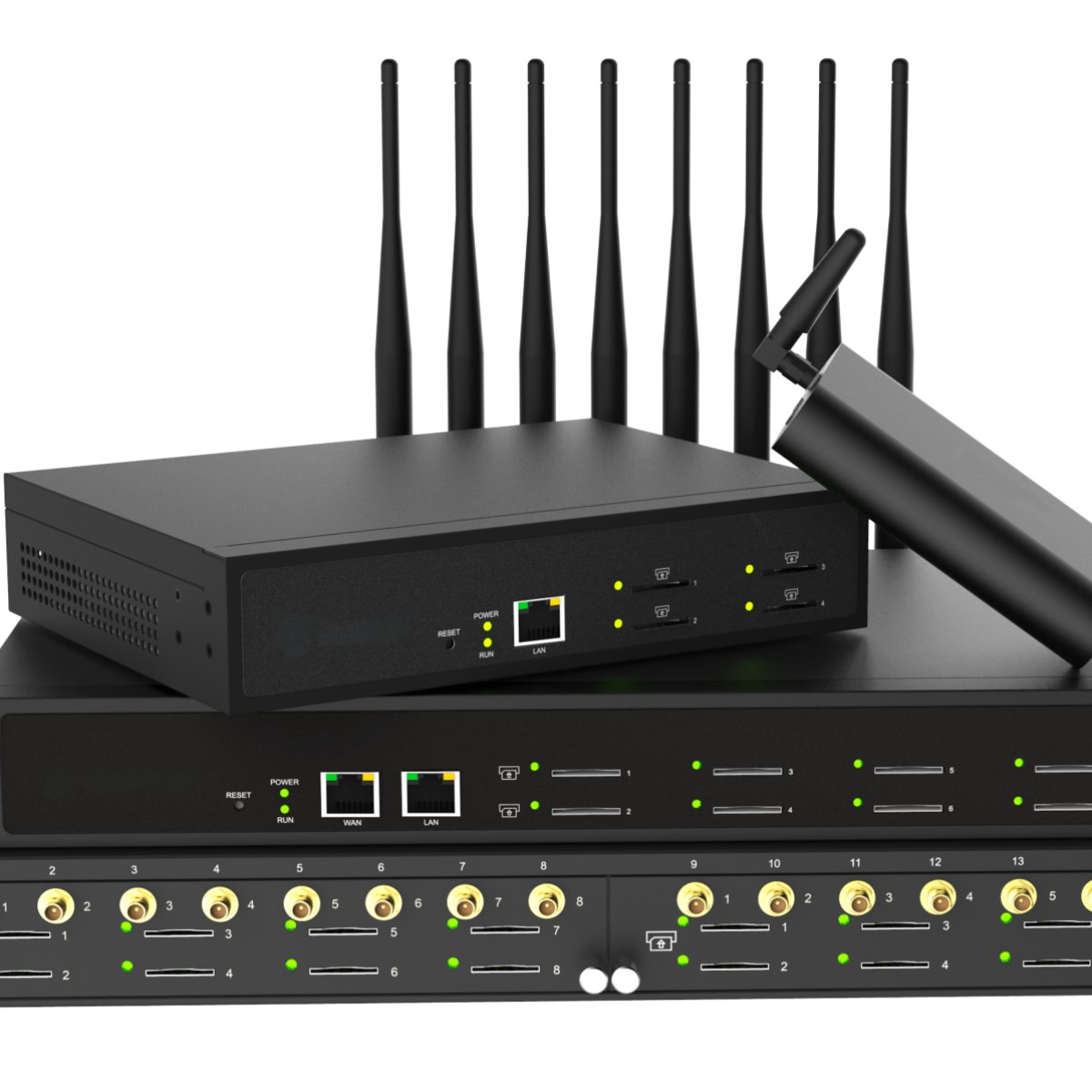
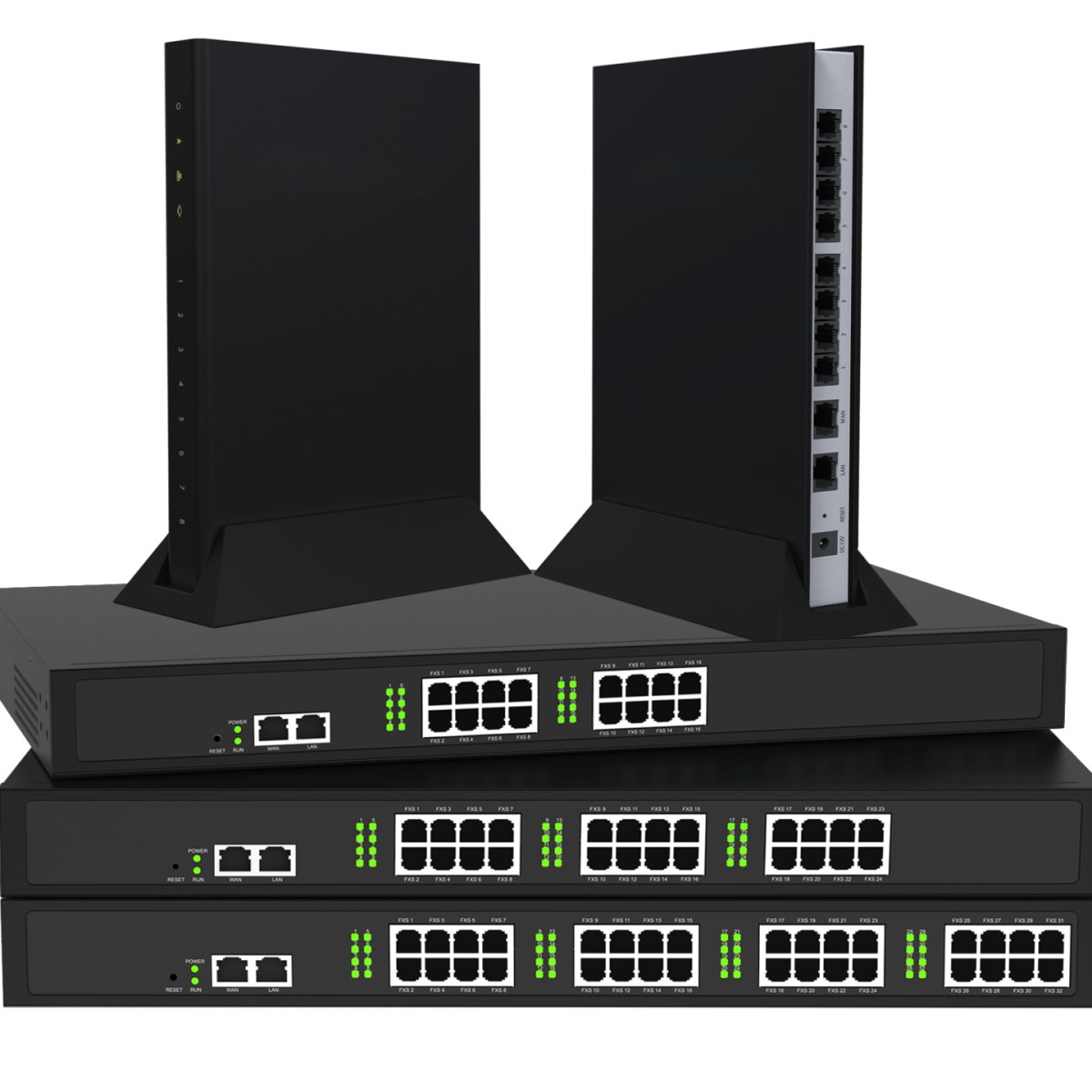
Multi-Port VoIP Media Gateway Appliance A high-performance hardware translation appliance engineered to bridge conventional legacy analog or digital telecommunications infrastructure with modern IP-based networks. Natively supporting Session Initiation Protocol (SIP V2) alongside physical analog (FXS/FXO) or digital (T1/E1/PRI) interfaces, this hardware gateway handles real-time hardware-accelerated voice transcoding, echo cancellation, and network signaling—allowing enterprises to preserve existing heritage telephony investments while migrating to modern cloud or on-premises IP voice servers.
Resolving Protocol Incompatibility Across Telecommunication Generation Layers
As enterprises transition toward Unified Communications (UC) and cloud-hosted voice networks, they encounter a significant physical bottleneck: existing field infrastructure. Sprawling facilities often house thousands of operational analog endpoints—such as emergency elevator lines, guestroom phones, legacy fax networks, and industrial paging horns—or rely on high-capacity copper trunk lines (T1/E1/PRI) from the local telecom utility. Scraping out this functional copper to run new network lines is frequently cost-prohibitive. A VoIP Gateway solves this problem by acting as a high-speed, real-time universal translator that connects legacy analog equipment to digital IP audio streams.
The core appliance runs a dedicated, hardened communication stack powered by specialized digital signal processors (DSPs). It mounts directly inside a standard 19-inch IT network rack and bridges two distinct telecommunication zones:
The Circuit-Switched Domain: Physical ports connect directly to heritage copper telephone wiring. Depending on the design, these can be FXS ports (which supply dial tone, battery current, and ring voltage to analog desk phones) or FXO ports (which plug directly into the local telephone utility's incoming phone lines).
The Packet-Switched Domain: Standard RJ-45 Ethernet ports tie directly into the building's high-speed data switches, routing traffic to the local network or the internet.
When an occupant lifts the handset on an analog phone, the VoIP gateway instantly reads the electrical current change, generates a digital dial tone, and processes the DTMF keypad tones. The internal DSP immediately compresses the raw analog audio waveform into standard digital data packets using bandwidth-efficient voice codecs (like G.729 or HD Opus). These packets are wrapped in Session Initiation Protocol (SIP) routing headers and injected onto the data network with strict Quality of Service (QoS) tags, ensuring they route seamlessly to modern cloud call centers or IP PBX servers without delay or audio clipping.
Core System Configuration Types
VoIP Gateways are specified into distinct physical configurations based on whether they are handling incoming utility trunks or internal building endpoints:
1. Analog FXS Gateways (Internal Infrastructure Preservation)
The Endpoint Hub: Features dense blocks of RJ-11 or multi-pair Amphenol ports that supply dial tone and power to legacy analog devices.
Best For: Connecting existing hotel guestroom phones, elevator emergency cabs, and warehouse fax machines directly to a modern cloud-hosted phone system.
2. Analog FXO Gateways (Utility Resilience & Failover)
The Line Bridger: Features inputs designed to accept traditional, unencrypted copper lines coming from the local telephone utility company.
Best For: Providing low-cost local analog line routing and crucial emergency fallback calling paths if the facility's main internet connection goes down.
3. Digital T1/E1/PRI Gateways (High-Density Enterprise Trunks)
The Enterprise Pipe: Features high-capacity digital coaxial or twisted-pair ports engineered to process multiplexed ISDN primary rate interface (PRI) lines, driving up to 30 or 24 simultaneous digital voice channels over a single wire run.
Best For: Large-scale corporate offices, call centers, and municipal hubs migrating high-volume trunking lines onto modern IP infrastructures.
Key Performance Features
Hardware-Accelerated Voice Transcoding: Built-in high-density DSP chips convert different audio codecs instantly with minimal latency, ensuring crystal-clear audio matching between legacy devices and modern network protocols.
Carrier-Grade Line Echo Cancellation: Outfitted with advanced, long-tail echo-cancellation processors ($128\text{ms}$) that filter out background hums, impedance reflections, and data loop line noises over long copper runs.
Intelligent Network Survivability (SAS): Features automated local routing logic. If the gateway loses connection to the central cloud phone server, it can automatically route internal office calls locally and shift external traffic through physical analog backup lines to maintain basic facility communication.
Comprehensive T.38 Fax Relay Support: Includes advanced protocol handling that converts sensitive fax machine data into specialized, error-corrected network data packets, ensuring reliable fax transmissions over modern IP connections.
Secure, Encrypted Data Streams: Natively processes Transport Layer Security (TLS) for call signaling and Secure Real-time Transport Protocol (SRTP) for voice encryption, blocking unauthorized network eavesdropping or packet sniffing.
Technical Performance MatrixEngineering Metric ParameterHigh-Density Analog FXS GatewayDigital T1/E1/PRI Trunk GatewayPhysical Interface Ports Onboard16 / 32 / 48 $\times$ FXS Ports (RJ11/Amphenol)1 or 2 $\times$ RJ-48C Digital T1/E1/PRI PortsMax Concurrent Audio SessionsUp to 48 Simultaneous Active ConversionsUp to 30 (E1) / 24 (T1) Concurrent ChannelsSupported Signaling ProtocolsSIP V2 (RFC 3261), FXS Loop Start / Ground StartSIP V2, ISDN PRI (EuroISDN, National ISDN-2)Voice Codec Processing StackOpus, G.711 (A/μ), G.722 (HD), G.729A/B, G.726G.711 (A/μ), G.722, G.729A/B, T.38 Fax PassNetwork Interfaces Built-inDual-Sensing 10/100/1000M RJ-45 LAN Ports2 $\times$ 10/100/1000M Gigabit Ethernet PortsEcho Cancellation Capability128ms Tail-Length G.168 Echo Filtering128ms Tail-Length G.168 Echo FilteringMaximum Cabling Distance RangeUp to 3,000 meters ($9,800\text{ ft}$) over Cat3/Cat5Standard Digital Trunk Carrier Cable SpecsHardware Form Factor Profile1U 19-Inch Rackmount Rugged Steel ChassisCompact Desktop / 1U Half-Rack Frame OptionsCompliance CertificationsCE / FCC / RoHS / UL 62368-1 Safety CertifiedCE / FCC / Telecom Part 68 ApprovedStandard Procurement Package Components
Intelligent Multi-Port Enterprise VoIP Media Gateway Appliance
Heavy-Gauge 19-Inch Equipment Rack-Mounting Brackets & Mechanical Screws
Grounded AC Power Interface Supply Cord (with optional dual redundant inputs on select high-density models)
Master System Administrator Configuration Guide and Software Access Credentials
Required System Add-ons: Telco 50-Pin Amphenol Cable Assemblies (for dense 24/48-port models), RJ-11/RJ-45 Structured Patch Panels, Network Layer 2/3 Managed Switches, and Active SIP Trunk Carrier Subscription Packages (Sold Separately based on project site BOQ requirements)