
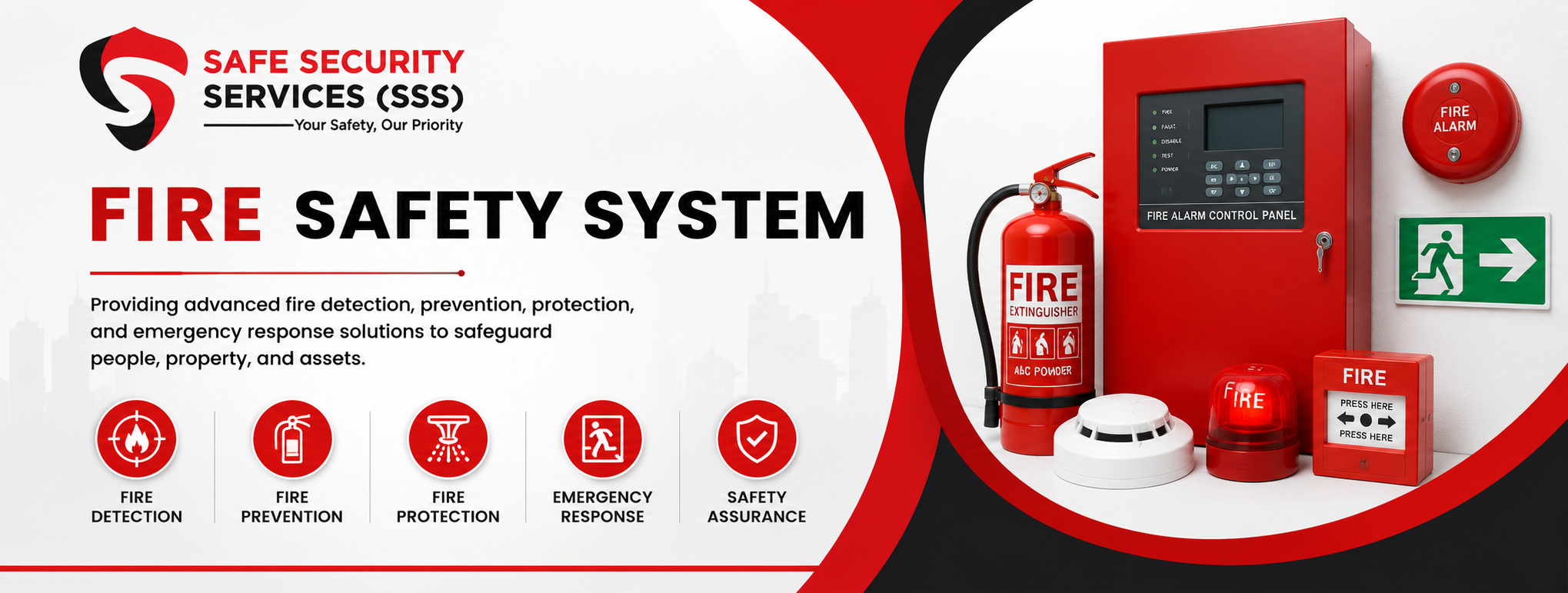
A Fire Safety System is
an integrated network of devices designed to detect, contain, and extinguish
fires, while safely alerting building occupants and emergency services. Rather
than relying on a single gadget, it functions as a multi-layered shield for a
building.
The system relies on a central
hub that continuously processes information and coordinates a response when a
threat is identified.
Core Components of the System
A complete fire safety setup is
divided into three primary categories, working in sequential order:
1. Detection (The
"Inputs")
These devices act as the eyes and
ears of the system, identifying the early signs of a fire.
2. Control Panel (The
"Brain")
The Fire Alarm Control
Panel (FACP) monitors all inputs. When a detector goes off, the panel
decides what actions to take: ringing alarms, flashing strobes, closing fire
doors to isolate smoke, or instantly calling the local fire department.
3. Suppression &
Notification (The "Outputs")
Once a fire is confirmed, the
system shifts into active defense and evacuation mode.
The Passive Element: Fire
safety systems also include "passive" protection like fire-resistant
drywall, self-closing fire doors, and specialized sealants. These don't
actively fight the fire, but they trap smoke and flames in one area to buy
people extra time to escape.