
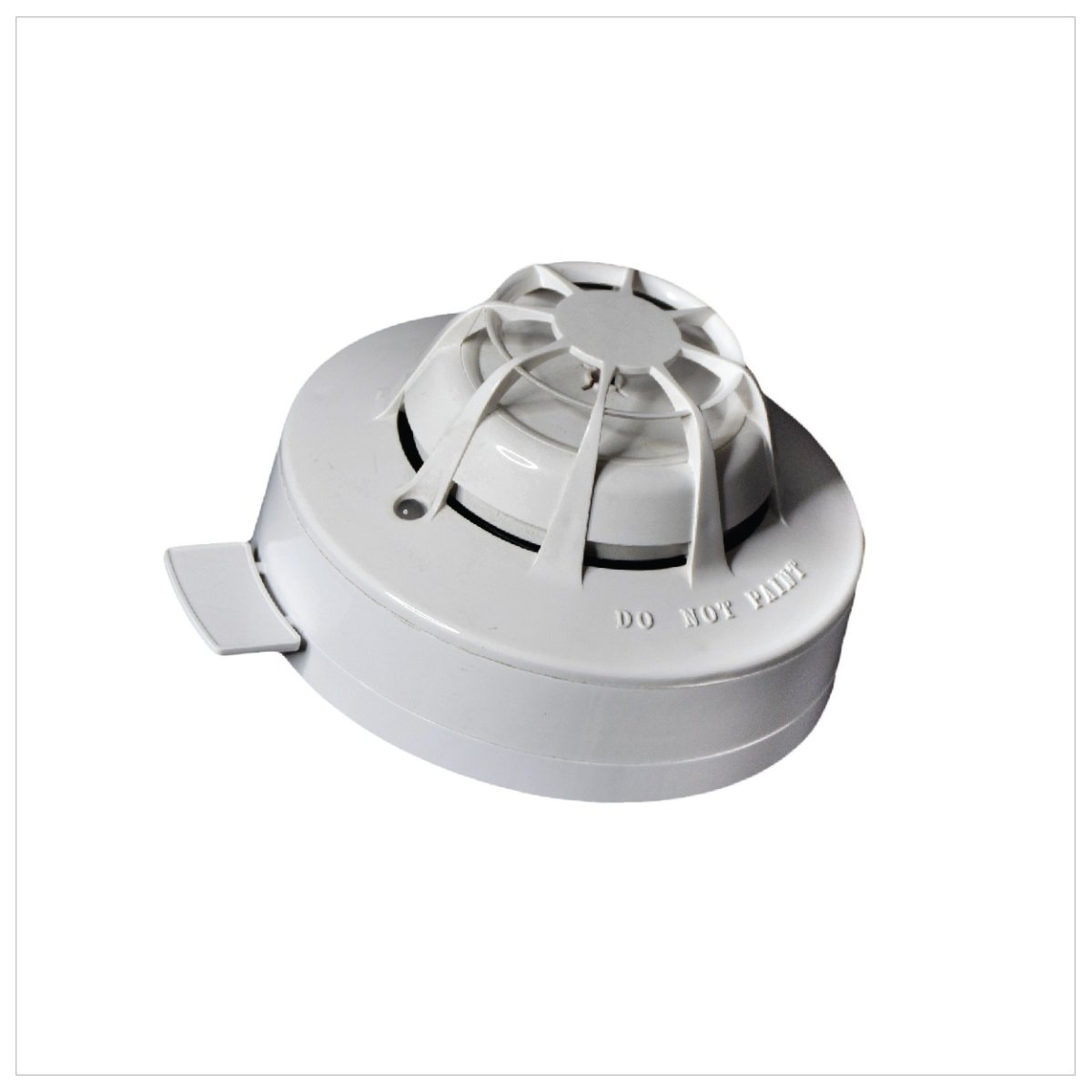
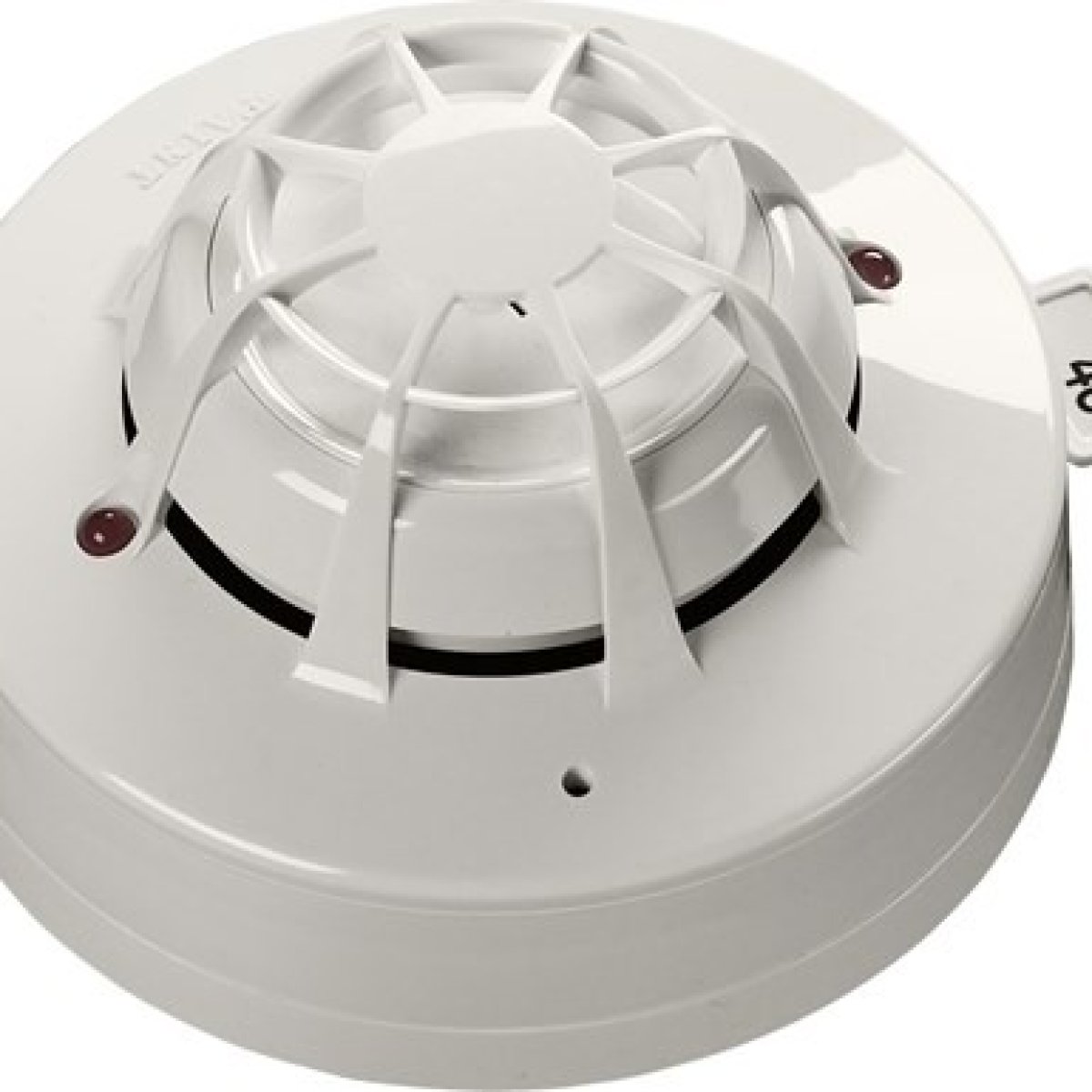
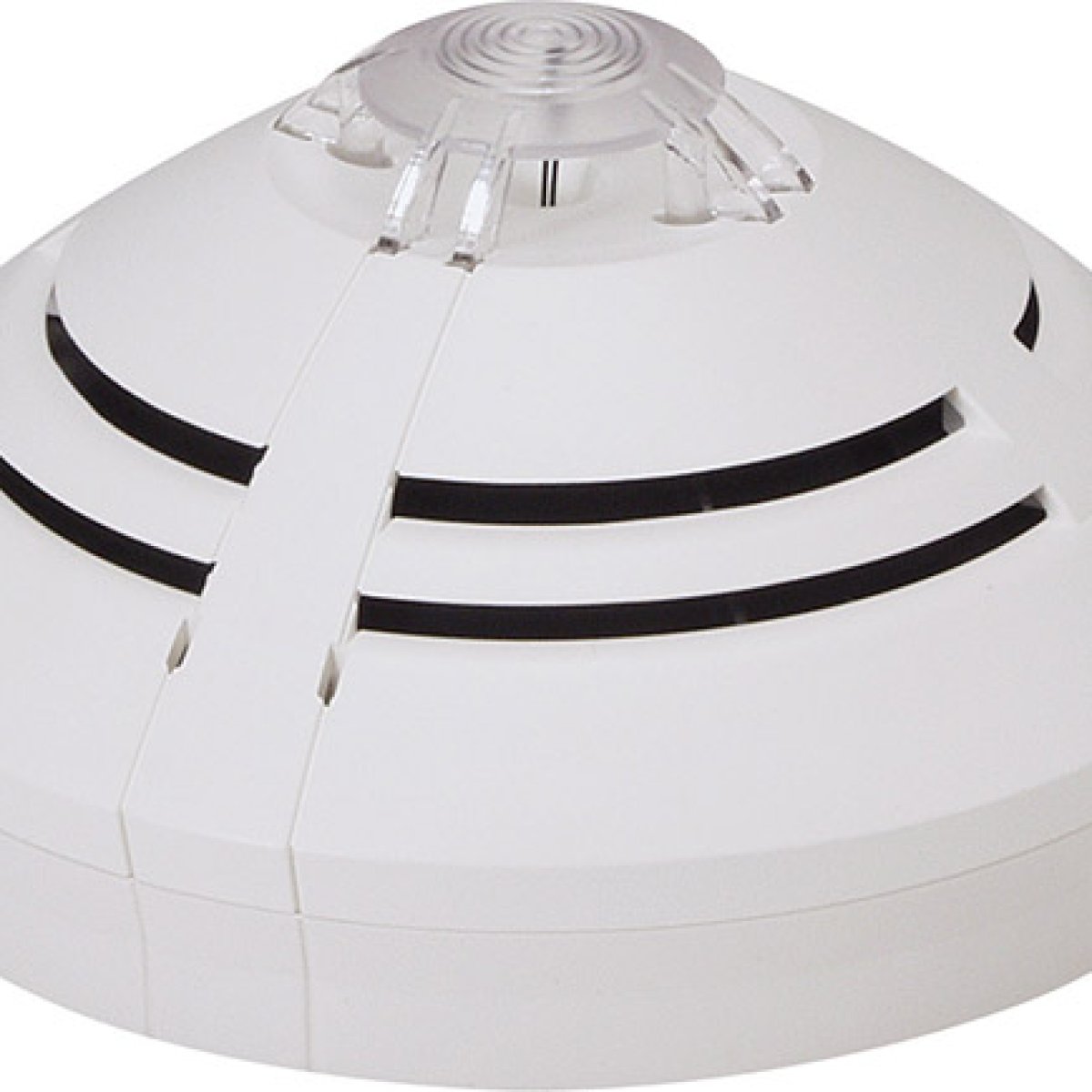
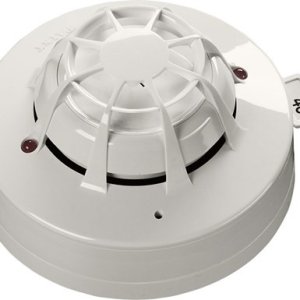
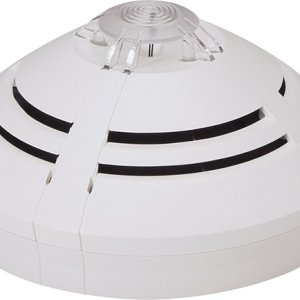
Intelligent Addressable Multi-Criterion Smoke, Heat, and Carbon Monoxide Detector An advanced, software-driven life-safety sensor designed to analyze multiple environmental signatures simultaneously to deliver ultra-rapid fire alerts with unparalleled false alarm immunity. Housing a photoelectric smoke chamber, thermal thermistors, and an optional electrochemical Carbon Monoxide ($CO$) sensor within a single low-profile footprint, this addressable device uses real-time mathematical algorithms to cross-reference environmental anomalies, protecting complex commercial and mission-critical assets.
Multi-Criterion Mathematical Fire Analysis for High-Risk Infrastructures
Traditional fire networks rely on single-signature sensors—such as a smoke detector checking for scattered light or a heat detector tracking a temperature spike. While effective in standard layouts, single-sensor units can struggle in complex settings. A sudden burst of culinary steam can trick a standard optical chamber into an expensive false alarm, while a slow, smoldering electrical fire beneath a raised data floor might take hours to produce enough smoke or heat to trip a single-signature sensor. An Addressable Multi-Sensor Detector is the modern solution to this challenge, monitoring multiple variables simultaneously to get a complete picture of the environment.
The device functions as a real-time environmental analyzer. Inside its compact shell are up to three independent sensing elements linked to an on-board microprocessor. The panel continuously samples the room for three distinct fire indicators:
Particulate Density: A high-precision photoelectric labyrinth chamber tracks visible airborne smoke and smoldering soot.
Thermal Kinetic Gradients: An open, fast-acting thermistor array tracks absolute temperature limits alongside sudden rate-of-rise thermal spikes.
Gas Sub-Products: An industrial-grade electrochemical cell tracks trace levels of Carbon Monoxide gas ($CO$), a toxic byproduct released during early incomplete combustion.
Instead of triggering an alarm if just one sensor rises, the detector's internal firmware runs advanced multi-criterion algorithms. It cross-references the data in real time—evaluating how fast the smoke density is changing alongside shifting thermal profiles and $CO$ gas levels. For example, if it registers an increase in smoke particles but sees zero shift in heat or $CO$, it identifies the source as non-combustion steam or dust and suppresses the alarm. Conversely, if it detects even a tiny amount of smoke paired with a slight rise in temperature and trace $CO$ gas, the algorithm recognizes a true smoldering fire and triggers an immediate alarm—well before any single sensor would have tripped on its own.
Strategic Operational Modes
The multi-sensor can be programmed via the central Fire Alarm Control Panel (FACP) to execute specific tactical screening rules depending on the room's profile or the time of day:
1. Dual-Criterion Interaction (Smoke + Heat)
Standard Environmental Mode: Blends optical particle tracking with thermal rate-of-rise tracking. It acts as an optical smoke detector during standard hours, but if it detects a potential false-alarm signature (like dust), it dynamically demands thermal confirmation from the thermistor before alerting the panel.
2. Triple-Criterion Integration (Smoke + Heat + $CO$)
The Full Life-Safety Shield: Monitors all three elements simultaneously. This configuration offers exceptional protection for deep-smoldering insulation fires, electrical vault short circuits, and sleeping areas where invisible $CO$ tracking is vital for occupant survival.
3. Day / Night Dynamic Sensitivity Scheduling
Adaptive Maintenance: The FACP can automatically adjust the internal logic based on building occupancy. During busy daytime hours, it can lower smoke sensitivity and lean on thermal tracking to ignore dust from foot traffic. At night, it can shift into high-sensitivity photoelectric mode to secure an empty facility.
Key Performance Features
Unrivaled False Alarm Immunity: Reduces costly, disruptive nuisance alarms by up to 95% inside harsh zones like hotel corridors near kitchens, dusty industrial bays, and large transport hubs.
Precision Addressable SLC Communication: Connects to the main FACP via a two-wire Signaling Line Circuit, utilizing dual rotary switches or digital software encoding to map a unique address for exact room and floor tracking.
Automatic Internal Drift Compensation: Continuously monitors dust buildup inside the optical chamber and chemical decay within the $CO$ cell, automatically shifting its internal calibration baselines to keep performance stable over time.
$360^{\circ}\text{ High-Visibility Multi-Color LED Ring}$: Twin LEDs provide immediate status updates from any angle: flashing green during standard standby monitoring, amber during a fault or maintenance warning, and solid red during a live fire emergency.
Conformal Coated Internal Circuitry: The underlying printed circuit board is fully sealed with an anti-moisture conformal wrap, shielding sensitive components from condensation and airborne dust.
Ideal Infrastructure Applications
Luxury Hotels & Multi-Unit Residential Towers: Positioned in guest suites and corridors to prevent false alarms from bathroom steam and cooking smoke while ensuring rapid response times.
Mission-Critical Data Centers: High-sensitivity setups deployed near floor plenums to detect electrical component overheating at a molecular level before open flames breakout.
Hospitals & Clean Room Facilities: Providing early fire alerts across surgical suites, labs, and clean rooms without relying on radioactive materials.
Technical Performance MatrixEngineering Metric ParameterAdvanced Triple-Criterion ProfileStandard Dual-Criterion ProfileSensing Technology ArrayPhotoelectric + Thermal + Electrochemical $CO$Photoelectric + Dual Thermal ThermistorsCommunication InterfaceTwo-Wire Supervised SLC Data LoopTwo-Wire Supervised SLC Data LoopStandard Input Voltage15V DC to 32V DC Digital Pulse15V DC to 32V DC Digital PulseStandby Current Load$\le 450\ \mu\text{A}$ nominal (LED flashing)$\le 350\ \mu\text{A}$ nominal (LED flashing)Fixed Thermal Alarm Point$58^{\circ}\text{C}\ (135^{\circ}\text{F})$ standard baseline$58^{\circ}\text{C}\ (135^{\circ}\text{F})$ standard baseline$CO$ Gas Sensing Sensitivity1 to 200 ppm tracking windowN/ASmoke Obscuration Range0.5% to 4.0% / foot sensitivity window0.5% to 4.0% / foot sensitivity windowCompliance CertificationsUL 268 (Smoke) / UL 521 (Heat) / UL 2075 ($CO$)UL 268 Listed / UL 521 / EN 54-29Standard Procurement Package Components
Intelligent Addressable Multi-Criterion Sensor Detector Head
Low-Profile Universal Twist-Lock Mounting Base Plate
Factory Removable Plastic Dust Cover Shroud (To protect sensors during building construction phases)
Technical Device Address Configuration Log and Field Programming Guide
Optional System Add-ons: Addressable Isolator Bases, Remote Sounder Base Attachments (for localized voice/tone alarms), and Heavy-Duty Polycarbonate Guard Cages (Sold Separately based on project design BOQ constraints)