
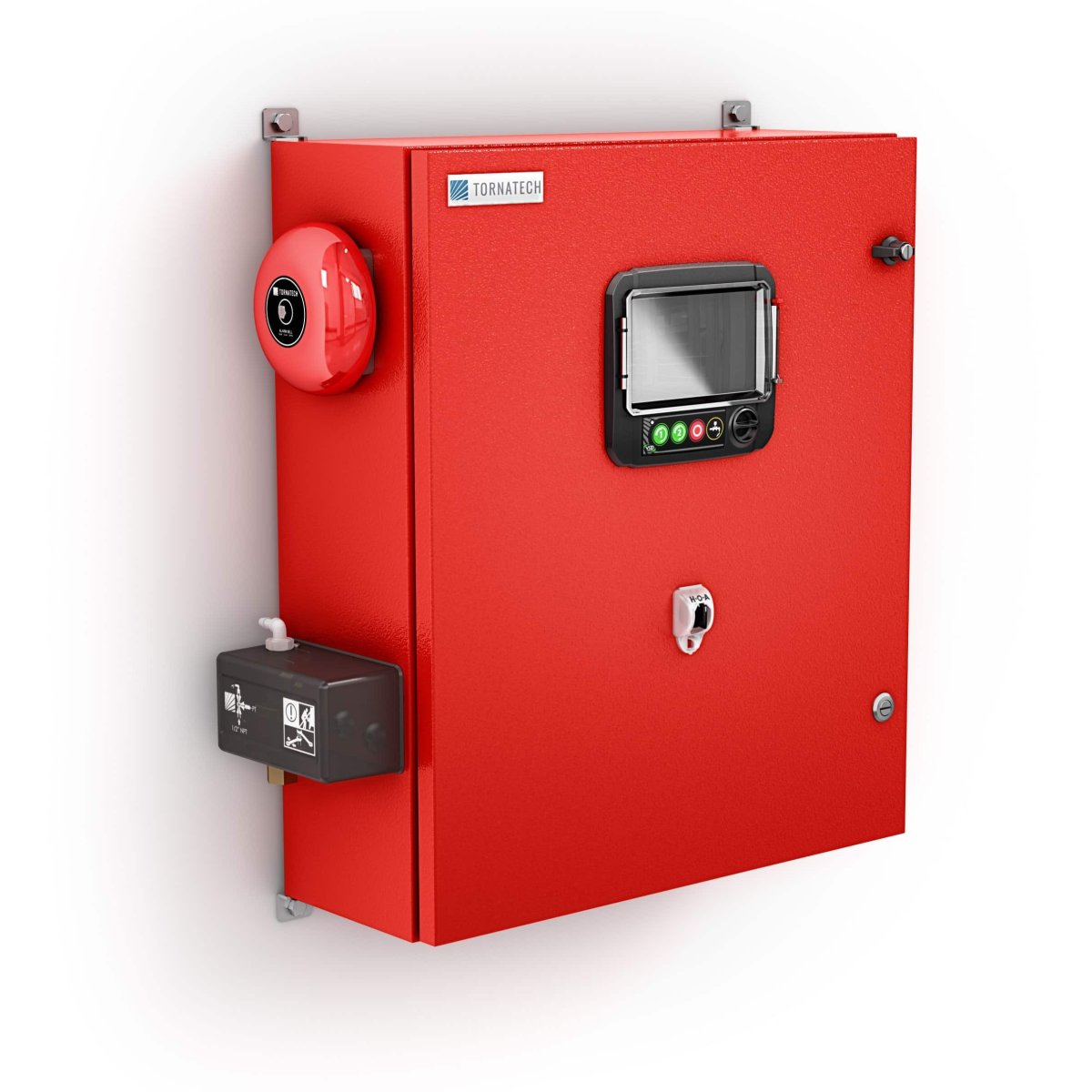
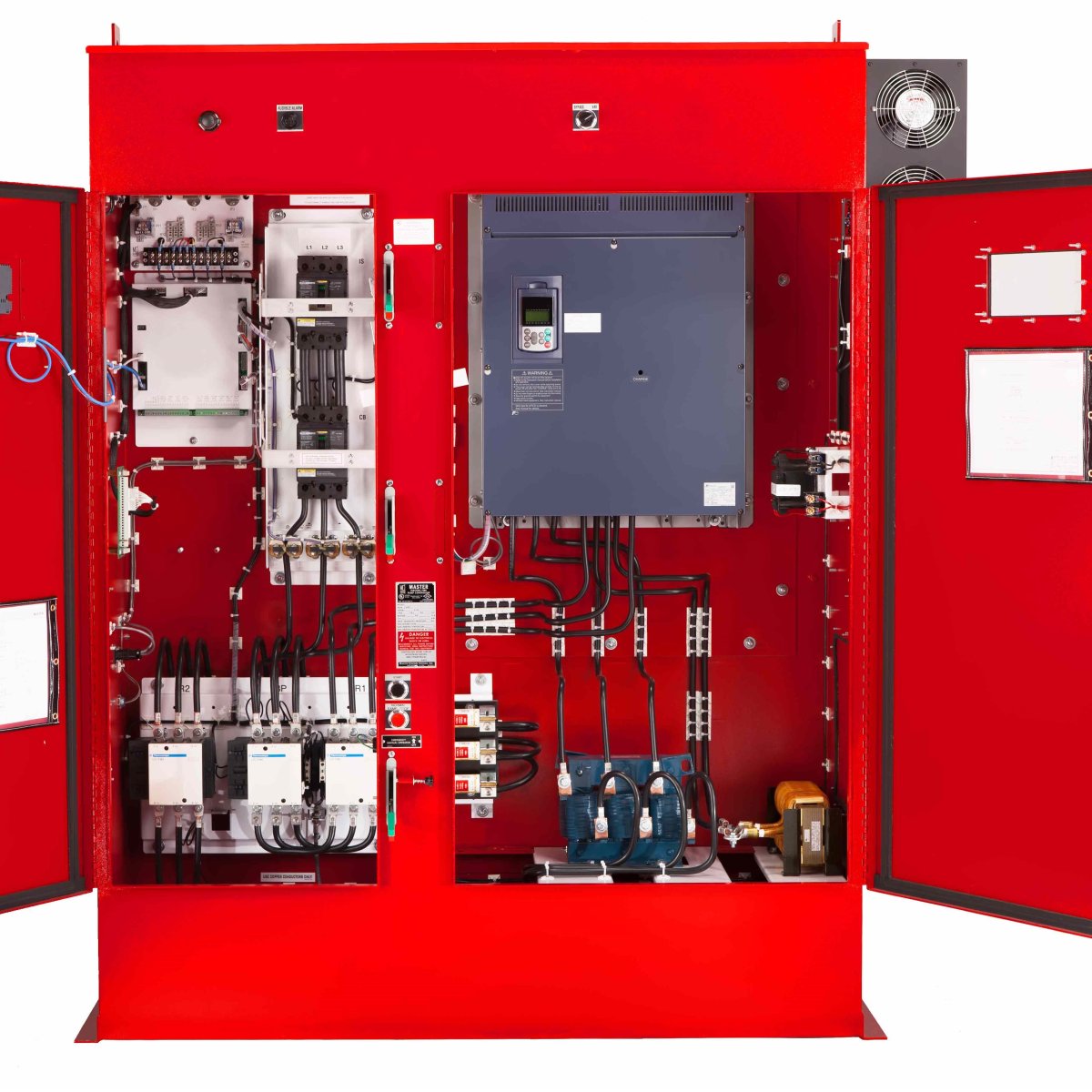
Fire Pump Control Panel An industrial-grade, solid-state central controller engineered to safely manage, monitor, and execute the automated starting sequence of electric motor or diesel engine-driven fire pumps. Outfitted with high-accuracy pressure transducers, multi-line digital status displays, and full phase-reversal protection, this rugged control panel ensures instantaneous pump activation during life-safety emergency events while providing continuous system telemetry to main building automation networks.
The Microprocessor-Driven Brain of Active Fire Suppression Grids
A high-capacity fire pump is only as reliable as the control panel directing its electrical or mechanical operations. Positioned as the central nerve hub of the fire pump room, the Fire Pump Control Panel is designed for one uncompromising mission: to start the pump under any circumstance during a fire emergency, prioritizing life-safety over standard hardware self-preservation.
Housed inside a heavy-duty, dust-tight, and water-resistant enclosure, the panel monitors the fire protection grid's internal pressure through an integrated sensing line. The moment a sprinkler pops or a hydrant valve opens, the resulting drop in hydraulic pressure is instantly captured by internal pressure transducers. The microprocessor handles the starting sequence automatically—whether it means throwing heavy three-phase current across an electric motor or initiating sequential cranking attempts across dual battery banks on a diesel engine—ensuring the building's pipes are immediately flooded with high-pressure water.
Core Operational Logic: Electric vs. Diesel Controls
Fire pump control panels are precision-engineered to match the specific drive source of the installation:
1. Electric Motor Controllers
Advanced Starting Configurations: Available in multiple starting methodologies to regulate the intense inrush of current drawn by high-horsepower motors, avoiding localized electrical grid drops. Options include Across-the-Line (Direct-on-Line), Part-Winding, Star-Delta (Wye-Delta), and Solid-State Soft Start.
Locked Rotor Protection Overrides: Unlike traditional industrial motor starters that cut power if the motor draws too much current, an NFPA 20 electric fire pump controller will run the motor to destruction during an active emergency to keep water flowing.
2. Diesel Engine Controllers
Redundant Battery Cranking Control: Natively manages the dual-battery configuration required for diesel fire systems. If the panel detects that Battery Bank 1 fails to spin the engine, it instantly swaps to Battery Bank 2, cycling back and forth across a pre-programmed sequence of cranking attempts.
Engine Telemetry Dashboards: Tracks complex mechanical data inputs including engine oil pressure, engine jacket water temperature, rotational speed (RPM), and fuel level alerts.
Key Performance Features
Strict NFPA 20 and Safety Certifications: Fully engineered and calibrated to meet global fire protection standards, boasting official UL Listing and FM Approval ratings.
Comprehensive Phase & Voltage Monitoring: On electric models, the panel continuously samples incoming three-phase power lines, instantly registering phase reversal, phase loss, or severe voltage drops and alerting facility managers via dry-contact relays.
Integrated Weekly Test Timer: Features programmable logic to execute automated, no-flow (churn) testing routines on a weekly basis, verifying mechanical responsiveness without manual intervention.
Color Touchscreen Graphical User Interface (GUI): Outfitted with a bright front-facing digital display that outputs real-time voltage, running current, system pressure logs, and detailed chronological historical event tracking (up to 3000+ logs).
Industrial-Grade Waterproof Enclosure: Typically rated at NEMA 2 (IP31) for indoor environments or NEMA 4X (IP66) for harsh industrial outposts, protecting vulnerable circuit boards against plumbing leaks or ambient moisture.
Ideal Infrastructure Applications
High-Rise Commercial Complexes: Providing automated, low-latency control logic to manage heavy vertical riser pressures across multi-stage pump configurations.
Industrial Industrial & Chemical Plants: Managing explosion-proof or heavy-duty diesel pump controllers in hazardous zones where municipal power lines are unreliable.
Data Centers & Telecommunication Hubs: Interfacing with building management systems (BMS) over Modbus or Ethernet protocols to provide live remote monitoring of the facility's fire readiness status.
Technical Performance MatrixEngineering MetricElectric Controller ProfileDiesel Controller ProfileOperational Supply Voltage200V / 230V / 380V / 460V / 600V AC (3-Phase)110V / 220V AC (For charging), 12/24V DC (Cranking)Enclosure RatingNEMA Type 2 (Standard) / Type 4 or 4X (Optional)NEMA Type 2 (Standard) / Type 4 or 4X (Optional)Pressure Sensing Range0 to 300 PSI / 0 to 500 PSI0 to 300 PSI / 0 to 500 PSICommunication ProtocolsModbus RTU / TCP-IP / BacNet OptionsModbus RTU / TCP-IP / BacNet OptionsInterrupting Rating (Withstand)25,000 to 150,000 Amps RMS SymmetricalN/A (Low-voltage control circuitry)Battery Charger IntegrationN/ADual, independent 10-Amp automatic float chargersStandard Procurement Package Components
Complete Fire Pump Control Panel Assembly (Factory Wired and Tested)
High-Accuracy Internal Pressure Transducer and Test Loop Fittings
Keys for the Locking Enclosure Door Handle
Exhaustive System Wiring Diagrams, Field Hookup Schematics, and Programming Manuals
Optional System Add-ons: Built-in Automatic Transfer Switch (ATS) for secondary generator backup power, External Alarm Louver, and Remote Annunciator Status Panels (Sold Separately)