
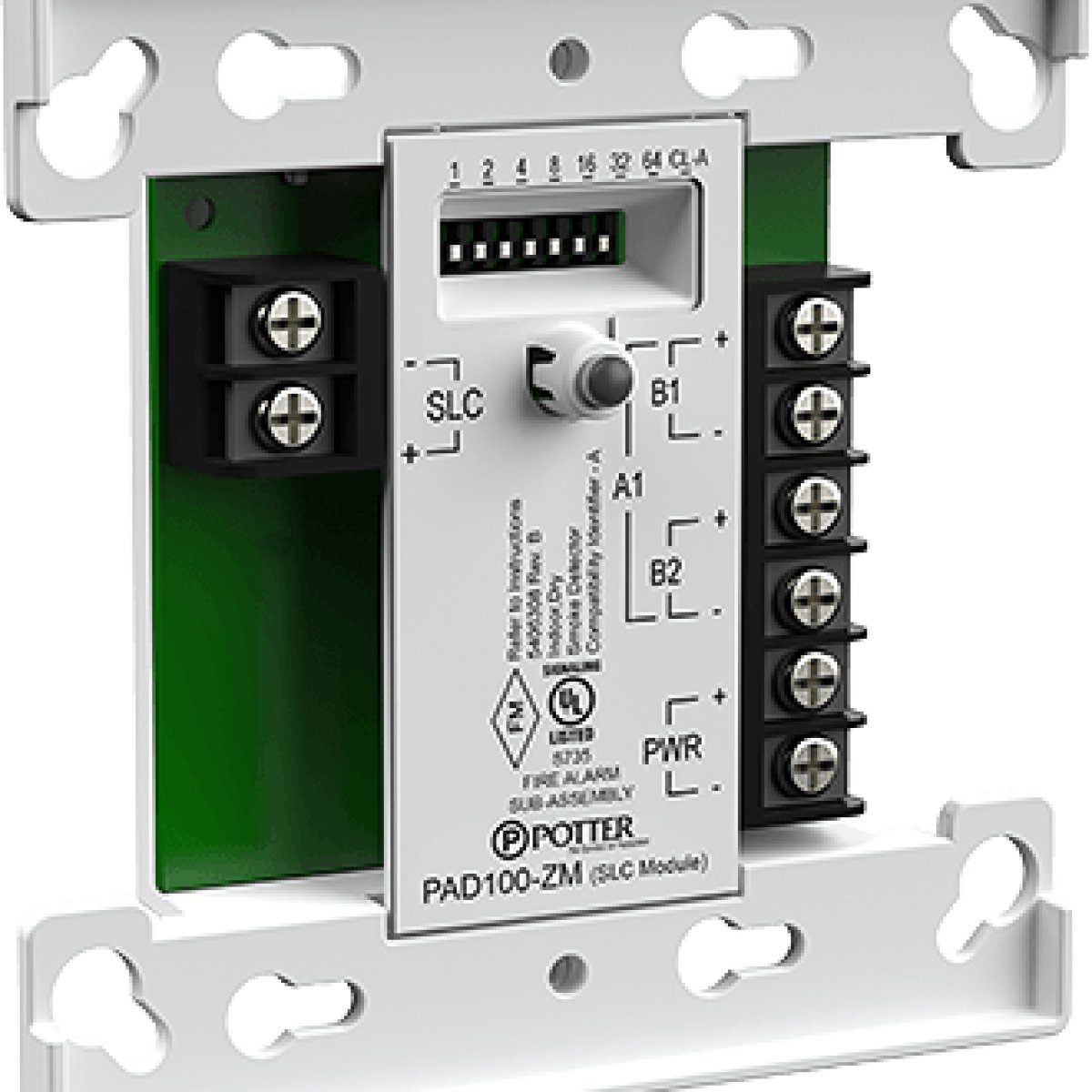
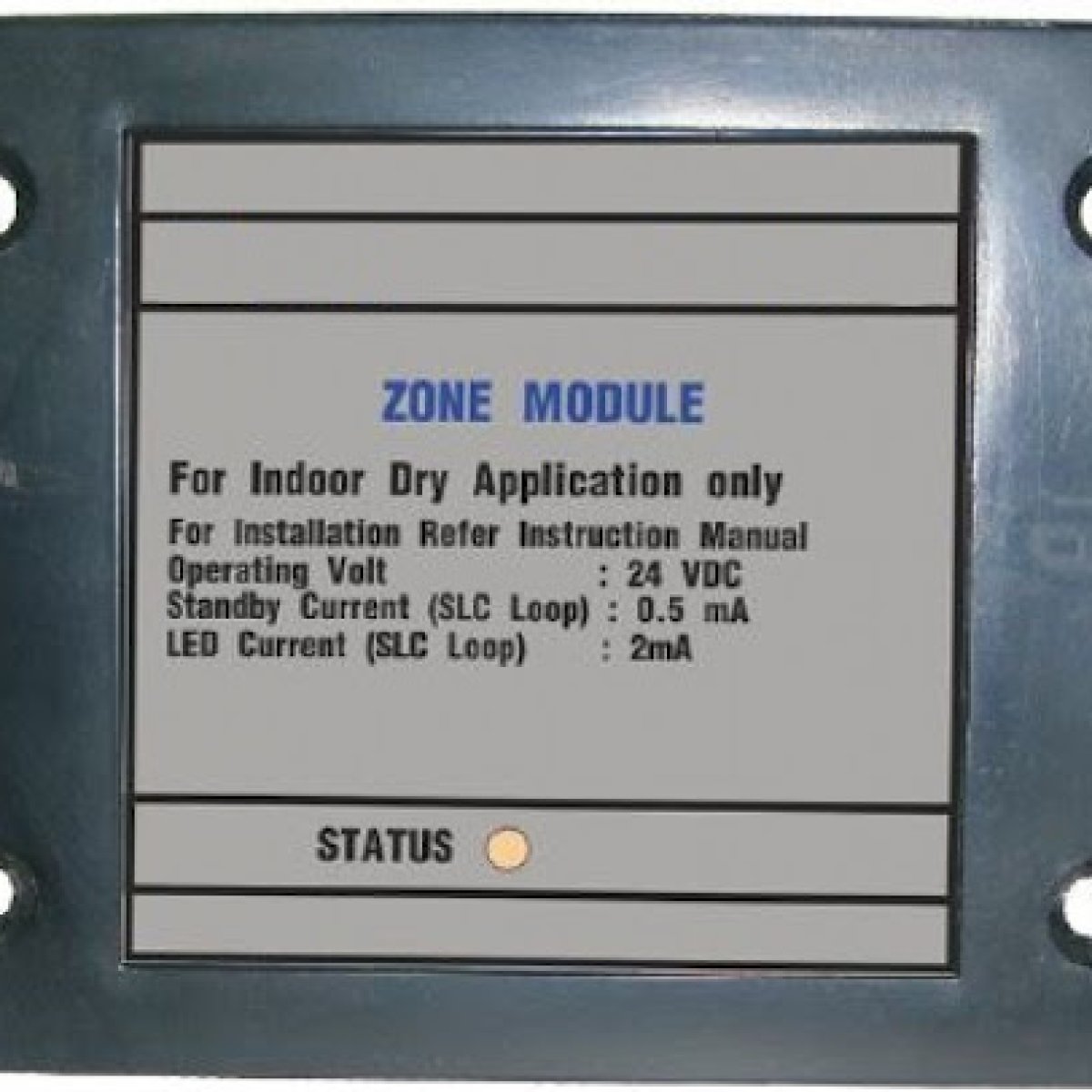
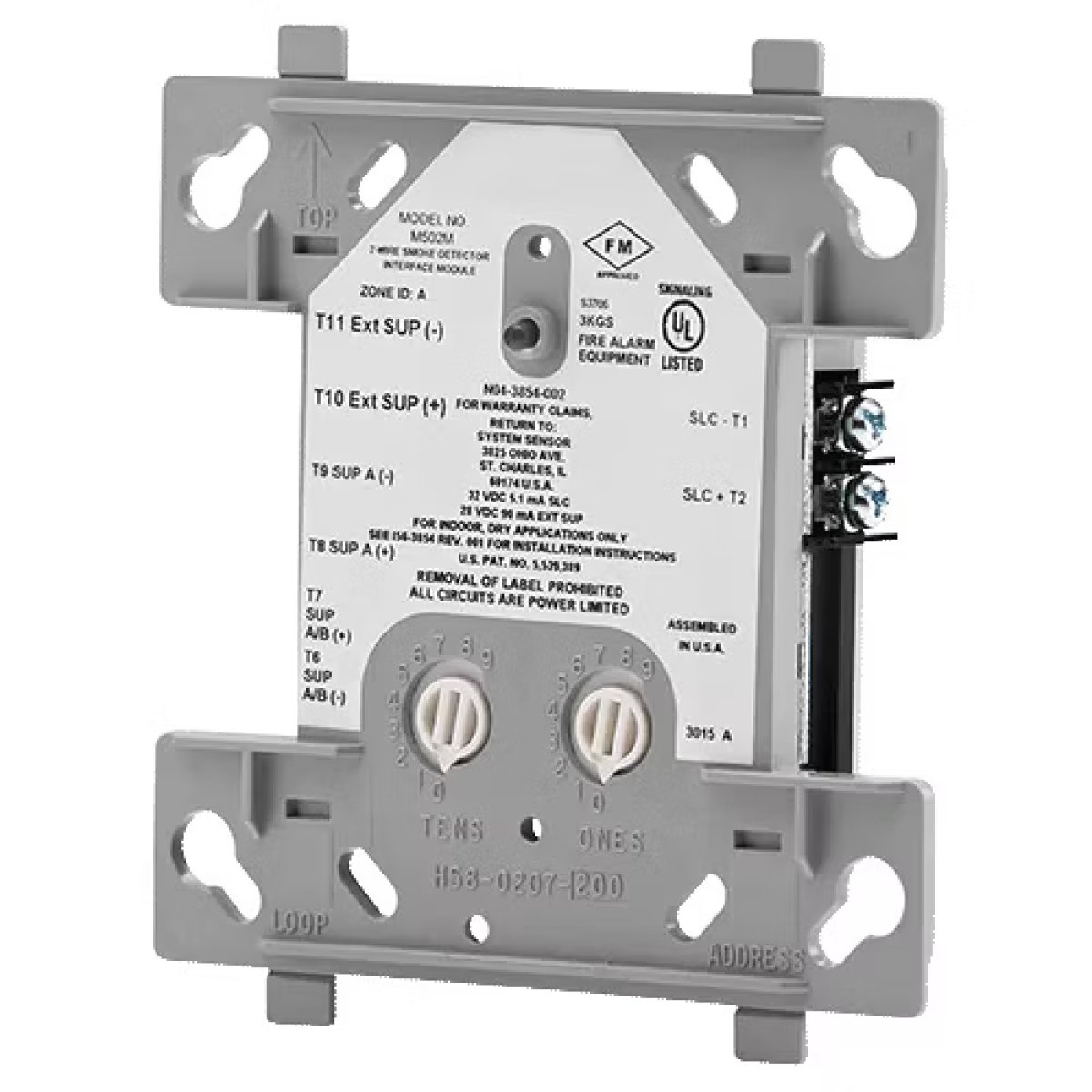
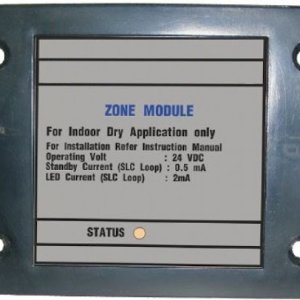
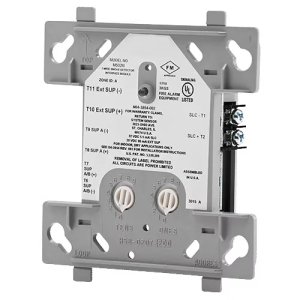
Intelligent Addressable Two-Wire Conventional Zone Monitor Module An advanced microprocessor-based interface device designed to connect a localized zone of conventional, non-addressable two-wire fire detectors directly onto a central Fire Alarm Control Panel’s (FACP) addressable Signaling Line Circuit (SLC). This module continuously supervises the conventional circuit's wiring and power supply, translating localized analog state changes (Normal, Trouble, Alarm) into a single, uniquely addressed digital data node on the primary loop.
Bridging Heritage Conventional Infrastructure with Modern Addressable Intelligence
When upgrading the life-safety infrastructure of a sprawling older facility, or when designing specific building zones exposed to extreme environments, engineers frequently encounter a logistical hurdle. While modern, software-driven addressable networks provide pinpoint device tracking, replacing hundreds of perfectly operational conventional two-wire smoke, heat, or beam detectors can be cost-prohibitive and structurally disruptive. Additionally, specialized safety hardware—such as linear heat detection cables or intrinsically safe explosion-proof sensors—is often only manufactured in conventional architectures.
An Addressable Zone Module serves as the critical engineering bridge that resolves this system gap. It allows a complete branch or "zone" of conventional initiators (up to 20 or 30 standard two-wire devices) to be treated as a single software node on the main FACP signaling line circuit.
The module is powered directly by the addressable SLC loop or an external auxiliary 24V DC power source. It extends a regulated, current-limited conventional circuit zone into the protected area. An end-of-line (EOL) resistor is wired across the final detector on the conventional branch. The module continually measures the voltage drop across this line:
Normal Standby State: Shifting current flows steadily through the EOL resistor, indicating a complete, secure circuit.
Trouble / Fault State: If a wire breaks or a detector head is physically unplugged, the circuit breaks. The module detects the loss of current and flags a localized "Open Circuit" fault back to the master panel.
Fire Alarm State: When any conventional detector inside the zone activates, its internal relay shorts the circuit, causing a massive current spike. The module instantly isolates this signature, filters out transient electrical surges, and transmits a verified digital alarm command with its unique loop address to the FACP.
Key Performance Features
Legacy System Upgradability: Allows step-by-step building modernizations by bringing pre-existing conventional detector grids directly onto a newly installed digital addressable control panel panel.
Strict Class A or Class B Supervision: Configurable via internal terminal wiring to support either Class B (Style Y) or loop-back Class A (Style Z) configuration rules, guaranteeing fault isolation down to the room level.
External Power Supply Isolation: Built with opto-isolators that physically separate the sensitive addressable data loop from the conventional branch circuit, preventing external building ground faults or lightning surges from crashing the central fire panel.
On-Board Diagnostic LED Flag: Features an integrated multi-color LED indicator that blinks green during active polling standby, illuminates solid red when a conventional detector trips into alarm, and switches to amber during an open-loop or short-circuit wiring fault.
Compact Low-Profile Enclosure: Engineered to slide cleanly inside a standard $4"\text{ square electrical junction box}$ or snap onto heavy-duty DIN-rails inside a central electrical riser enclosure.
Ideal Infrastructure Applications
Existing Building Retrofits: Integrating functional, pre-existing conventional floor networks into a facility-wide addressable panel upgrade.
Industrial Hazardous Material Vaults: Managing zones of conventional, intrinsically safe explosion-proof gas or heat sensors through a galvanic safety barrier.
Sprawling Warehouses & Racking Yards: Interfacing conventional linear heat detection (LHD) cable runs back onto a central addressable loop.
Technical Performance MatrixEngineering Metric ParameterAddressable Conventional Zone Module ProfileCircuit Monitoring ClassTranslates 1 $\times$ Conventional Zone to Addressable NodeData Loop InterfaceTwo-Wire Supervised SLC LoopExternal Auxiliary Supply24V DC Regulated Nominal (18V DC to 28V DC)Maximum Standby Current$\le 300\ \mu\text{A}$ (SLC Loop) / $\le 90\text{ mA}$ (Aux Power)Conventional Line Load LimitMaximum 25 to 30 Conventional Detectors per moduleEnd-of-Line (EOL) Resistor3.9K / 4.7K Ohm (Manufacturer dependent selection)Enclosure Ingress ArmorIP30 / High-Impact Flame-Retardant Polymer ShellCompliance CertificationsUL 864 Listed / NFPA 72 Compliance / CSFM ApprovedStandard Procurement Package Components
Intelligent Addressable Conventional Zone Interface Module Unit
Precision Calibrated End-of-Line (EOL) Monitoring Resistor
Universal Zinc-Plated $4"\text{ Junction Box}$ Mounting Screws and Adaptor Bracket
Factory Address-Configuration Log Sheet and Technical Wire Termination Diagram
Optional System Add-ons: Surface-Mount Plastic Protective Boxes, Multi-Module Riser DIN-Rail Enclosure Cabinets, and Galvanic Barriers for Hazardous Locations (Sold Separately based on project design BOQ constraints)